

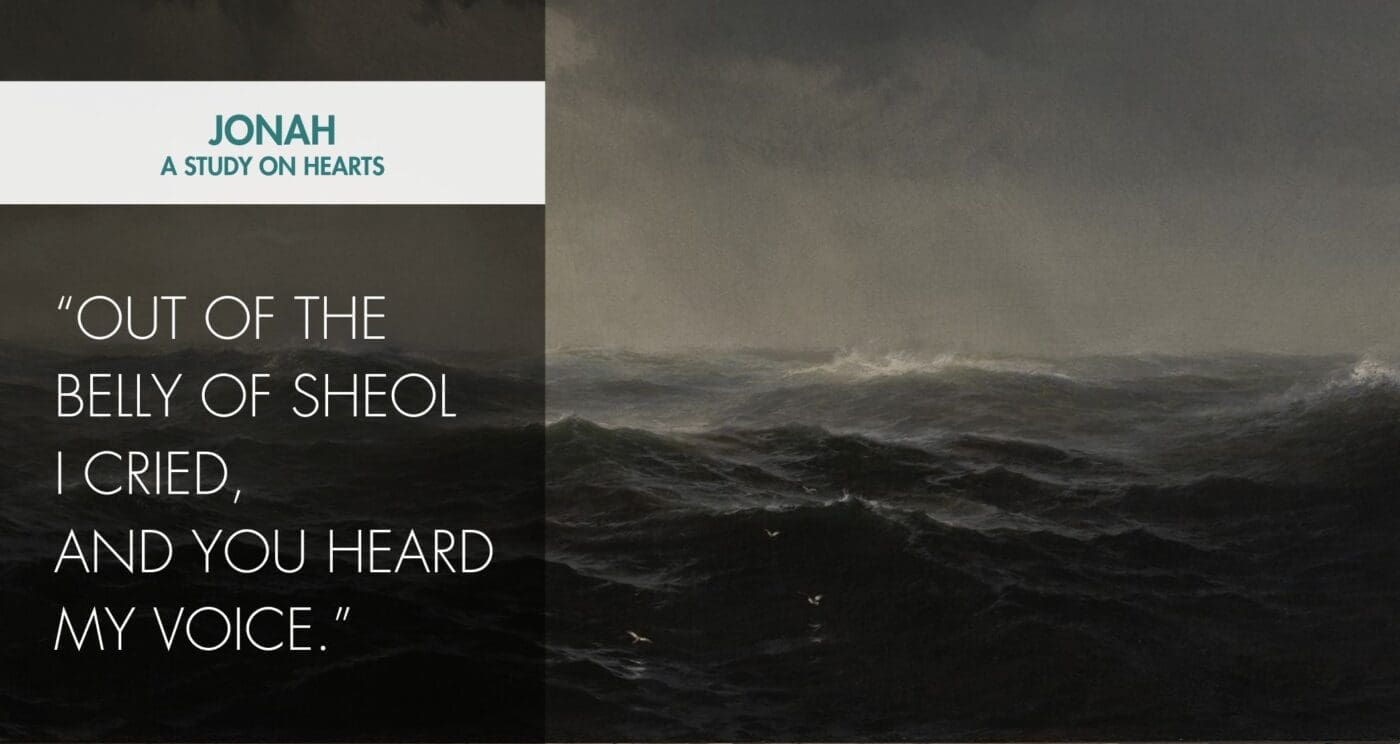
Are you in a pit? We all go through hard times, and being in a pit is challenging. These seasons test our faith and prompt us to wrestle with profound questions about God and ourselves. In Jonah 1:17-3:1, Jonah is in the belly of the fish—his pit. He is at his lowest point, physically and spiritually. He chose a path away from God. The good news is that God’s heart is for all people, and he wasn’t out to destroy Jonah. In Jonah’s pit, God gets Jonah’s attention, and his response shows us what we should do when we are in a pit. We see Jonah doing three significant things in his pit—he prays, he believes, and he praises.
Transcript
I have a question for you, a question that many of us can relate to, Are you in a pit? It’s a common human experience, isn’t it? That feeling of being trapped, surrounded, at rock bottom. Pits come in many shapes and sizes, and they arrive for different reasons. Perhaps it’s a pit of your own making, born from your mistakes or your own stubbornness. Or maybe it’s a pit caused by other people, their actions or their decisions have got you in a difficult spot. Think of Joseph or Jeremiah, they were in prison or a pit because of others. And then, there are those pits that come from God – circumstances beyond human control. Think of what Job went through, or the time Paul was shipwrecked. These are hard times, but it wasn’t a personal mistake or another person. God was the one who brought or allowed it.
Regardless of how you got there, being in a pit is challenging. These are difficult seasons that test our faith. In these moments that we wrestle with big questions, questions about who God really is, questions about ourselves, questions about our purpose on earth. These are also times of great potential. Potential for really good things to happen deep inside or the potential for the opposite, we can become bitter, cynical, and cold. And I am sure you know people who have ended up on either side. Sometimes our trials make us better and sometimes we become bitter.
Our story today picks up with Jonah at his absolute lowest point, physically and spiritually. Remember he’s been running from God’s command to go to Nineveh. He knows God created everything and is everywhere. Yet, he still ran, like he could actually get away. And when you’re running from God, the only direction to go is down. Jonah went down to Joppa, down to the ship, and down into the hold. He was thrown overboard and went down into the depths of the sea. He deliberately chose a path away from God, and that path leads one direction, down.
The good news, though, is God’s heart is for all people. He wasn’t out to destroy Jonah. He’s actively trying to get him back! That’s amazing! And it’s in his pit, that dark, watery grave, where God gets Jonah’s attention.
From his pit Jonah provides us with a good response for what we can do when we are a pit. If you are also at rock bottom, what should your response be? What are we supposed to do when we are in a pit? In Jonah chapter 2, we see Jonah doing three significant things in his pit, the belly of the great fish. He prays, he believes, and he praises. There is a lesson here for how we should respond. As I read the passage see if you can identify these 3 responses from Jonah.
17 Now the Lord had prepared a great fish to swallow Jonah. And Jonah was in the belly of the fish three days and three nights.
2 Then Jonah prayed to the Lord his God from the fish’s belly. 2 And he said:
“I cried out to the Lord because of my affliction,
And He answered me.
“Out of the belly of Sheol I cried,
And You heard my voice.
3 For You cast me into the deep,
Into the heart of the seas,
And the floods surrounded me;
All Your billows and Your waves passed over me.
4 Then I said, ‘I have been cast out of Your sight;
Yet I will look again toward Your holy temple.’
5 The waters surrounded me, even to my soul;
The deep closed around me;
Weeds were wrapped around my head.
6 I went down to the moorings of the mountains;
The earth with its bars closed behind me forever;
Yet You have brought up my life from the pit,
O Lord, my God.
7 “When my soul fainted within me,
I remembered the Lord;
And my prayer went up to You,
Into Your holy temple.
8 “Those who regard worthless idols
Forsake their own Mercy.
9 But I will sacrifice to You
With the voice of thanksgiving;
I will pay what I have vowed.
Salvation is of the Lord.”
10 So the Lord spoke to the fish, and it vomited Jonah onto dry land.
3:1 Now the word of the Lord came to Jonah the second time, saying,
1. Jonah Prayed
Our lesson today begins with the Lord preparing a great fish to swallow Jonah. Imagine that scene for a moment. Jonah has just been thrown overboard and, I am guessing, he expects his life to soon be over. Instead, God provides a great fish. Swallowed whole, in the dark, slimy, disgusting belly of a massive creature. What a place to be! What was he thinking? “I am still alive. What is this place?” We don’t know, but we know this very unusual event was God’s provision. He becomes aware enough to pray and he remembers enough of his prayer to tell others about it after he emerges.
It’s from this desperate, impossible situation that Jonah finally prays. This stubborn, hard-hearted Jonah, who had been silent through the storm, who wouldn’t pray even when the sailors begged him, now cries out to God. It is encouraging to know that now he is praying.
Yes, he should have prayed earlier, absolutely. But he waited until he was swallowed by a fish, probably expecting to suffocate when it happened, but here he was still alive and breathing. I had to wonder when do we use prayer? Is prayer our last option? Is this what we do when nothing else works? Hopefully not, let’s use the option of prayer often! But it does bring up a good question, where do we turn in our deepest crises, when we’re utterly helpless? This moment reveals much about who we are, and we are glad to see Jonah praying, it’s late, but at least he is now praying. Now, notice a few things about his prayer.
First thing, notice the content of Jonah’s prayer. He is praying scripture. In his desperate moment, when he is in his pit, scripture comes to his mind. Many lines of his prayer in the fish echo passages from Psalms. Here are few
• Verse 2 sounds a lot like Psalm 18:6 “In my distress I called upon the Lord and cried unto my God: he heard my voice out of his temple, and my cry came before him, even into his ears.”
• Verse 3 aligns with Psalm 42:7 “Deep calls unto deep at the noise of Your waterfalls; All Your waves and billows have gone over me.”
• Verse 4 is reminiscent of Psalm 31:22 “For I said in my haste, I am cut off from before thine eyes: nevertheless, thou heardest the voice of my supplications when I cried unto thee.”
There are others and I encourage you to check into it when you have a chance. As you go through Jonah chapter 2, you can see Jonah knew the Bible, and it became his language in this moment.
This is a powerful lesson for us. When we find ourselves in despair, when we are in a pit and don’t have the words or the language to pray. Open the Bible and pray scripture. The Psalms are a great place to start. They are full of emotion, expressing the range of human feeling, and praying God’s Word back to Him is incredibly powerful.
About 20 years ago when my dad died unexpectedly from a heart attack. Our family was together, and we were shocked and dazed. We were seeking comfort from the Bible. I remember reading 1 Corinthians 15 and verse 25 and 26 stood out in that moment and I have prayed it many times since. It says, “For He must reign, till he hath put all enemies under his feet. The last enemy that shall be destroyed is death.” Death shall be destroyed. That is my hope, and I often pray that prayer, looking forward to the day when death itself will die. That is just one example of when the Bible was living in my crisis. There are moments of despair and loneliness, and the Bible is a comfort. We also experience high moments of praise and joy. The Bible also has language for us then. Praying the Bible is a powerful tool, and from the stomach of a fish this is what comes to Jonah’s mind.
A second aspect of Jonah’s prayer is his recognition of God’s sovereignty. In verse 3, he declares, “For you cast me into the deep…” Wait a minute, didn’t the sailors throw him overboard? Yes, he knew they did; he remembered it well. But I think Jonah is now seeing big picture. He’s reflecting, remembering the storm, the lot, the sailors’ attempts to save him, the storm getting worse and realizing that ultimately, this was God at work. He’s recognizing God’s hand in his circumstances, even in being “cast into the deep.” I see this as a positive shift, indicating that his heart is beginning to turn in the right direction. He’s starting to see things as they really are.
Did Jonah mean what he was saying? Was Jonah being real with his prayer? As usual there are many perspectives on this. Some say his prayer here is hypocritical, just words. This is his desperate plea because it’s his only option. They point to the number of times “I” is used in his prayer saying it shows how self-centered he still is. Look at his actions in Jonah 1 and 4, this shows his prayer was not very genuine. I understand that perspective and hear what is being said, however, I lean to believe his prayer is sincere and his words are true to what is going on inside.
However, I do believe many times people do cry out to God in their hard times. “God, rescue me! God, help!” and God does. Then when things are good, they forget and go back to old patterns. What do you think, was Jonah sincere in his prayer here in Jonah chapter 2?
2. Jonah Believed
Our second point is Jonah believed. Think about the word believe. What does it mean What kind of belief are we talking about here? I want to be clear. This is not just intellectual knowledge. Many people say, “I believe in Jesus” because they know the story, they have the knowledge. To them knowing equals believing. But believing the way it is used in the Bible is more than head knowledge. Believing refers to life-changing belief, a belief that transforms you from the inside out and changes who you are and how you act.
First Jonah prayed, and now in verse 4 Jonah is believing. He says, “I have been cast out of your sight.” He feels utterly forsaken, cast out of God’s sight, which makes sense given his dark, isolated confinement. But then comes this incredible phrase, “I will look again toward your holy temple.” How could Jonah say this? Do you think he thought he would make it out alive?
Jonah’s circumstances haven’t changed. He’s still very much in the pit, in the lonely, dark, disgusting belly of a fish. But he is starting to change, and that changes everything. This is a crucial lesson for us in our pits. We’ve all been there, praying and feeling like our prayers are just bouncing off the ceiling. What do we do then? Throw in the towel? Give up? Hopefully not. Because when we reach the point where God is all we have, we realize He is all we need. We are not the first people to feel this. In Psalm 142 David describes it well. First, he says, “I have no refuge, no one cares for my life.” He is abandoned. He follows this up with a cry to God, “You are my refuge.” Peter also puts it nicely when Jesus asks his disciples if they also want to leave. His reply, “Lord, to whom shall we go? You have the words of eternal life.” Two great examples of where to turn when it seems like we have nothing.
It seems Jonah is beginning to realize this: God will get him through, even if it doesn’t look like he’ll come out alive. At this point I don’t think Jonah knew whether he would live or not, but either way he was planning to worship God.
This reminds me of the story of the Hebrew boys in Daniel, they said, “Our God whom we serve is able to deliver us from the burning fiery furnace, … But if not, let it be known to you, O king, that we will not serve your gods…” (Daniel 3:17-18). They were committed and knew God could save them, but they didn’t know if He would, but they made it clear if he didn’t, HE is still God. This is how believing in God looks. It is life-changing and powerful and this change is coming in Jonah.
His belief didn’t come easy. Listen to the words he uses to describe the intensity of his experience. “The waters surrounded me, even to my soul; weeds were wrapped around my head. I went down to the moorings of the mountains; the earth with its bars closed behind me forever”. “Water encompassing his soul” – what does that mean? Have you ever had water in your soul? It’s the feeling of desperate pressure, like when you’re sibling held you underwater. There comes that point where you need air and you need it now! It’s the intensity of feeling overwhelmed and suffocated. And the weeds wrapped around his head, I take this as literal, I am not sure if he could see but there it was wrapped around his head. This would make the overwhelming terrifying sensation even worse.
Jonah was in a desperate place, and he knew it. He thought he was going to die. He believed the bottom of the mountain would be his prison forever. Yet, here he is, alive, breathing, sensing that God is up to something, that God isn’t finished with him yet. This is God’s salvation at work.
And right after this admission, in the fish’s stomach Jonah says, “ Yet You have brought up my life from the pit, O Lord, my God.” He says this while still in this terrible place! How could he say this, nothing about the pit changed? Listen, this isn’t a description of his physical freedom, I believe he is talking about an internal transformation. He’s coming to a place of understanding, he is seeing things as they really are, and this internal change is what is bringing him up out of the pit. Even though his external circumstances remain the same, he is finding freedom. His heart is changing, and He gives God credit for bringing him out of the spiritual pit he was in. Believing for Jonah didn’t come easy, but it is coming.
In verse 7 we have the temple mentioned a second time. I think his repeated allusion to the temple is significant. In the Old Testament, the temple was where God dwelt, signifying God’s presence. Remember Jonah was from the Northern Kingdom, which had set up false worship in Bethel and Dan. But Jonah clearly wasn’t fooled by or into that false worship. He was praying toward the temple, praying to the God of Jerusalem. This was where God’s true presence was in His holy temple. Again I see a sincere heart, truly seeking God.
In verse 8, Jonah states, “Those who regard worthless idols forsake their own mercy”. This is a powerful verse. When we pursue “lying vanities,” when we worship idols – anything that takes God’s rightful place in our lives – we forfeit God’s grace. We forfeit the mercy that is ours. Is there any way I am forfeiting God’s grace? This is a big question. I encourage you to take time and examine yourself.
Here in the middle section of Jonah’s prayer I see several phrases that point to his trust in God growing. His circumstances are still dire, his pit is very real, but there is an internal transformation happening. And Jonah is beginning to believe. First, he prayed, then he believed and that leads us to our third point.
3. Jonah Praised
Our third point is Jonah praised.
Jonah declares, “But I will sacrifice to You with the voice of thanksgiving; I will pay what I have vowed.” This language of sacrifice and vows is the same language used by the sailors at the end of chapter 1, whose worship was undoubtedly real. Jonah commits to praising the Lord with thanksgiving.
This is a powerful principle for us: God’s people who praise Him in every circumstance. It’s easier said than done, I know. But it’s incredibly powerful if we, as His children, can praise Him despite what’s happening on the outside.
Consider the example from 2 Chronicles 20, where King Jehoshaphat went into battle by sending the singers first. Logically, it makes no sense. Why announce your presence to the enemy with unarmed singers, only to have them slaughtered? But God set an ambush, and it was a great victory. This is a potent reminder for us: praise Him in our storm. Praise Him in our pit. He is worthy.
Then he concludes his prayer with that timeless truth: “Salvation is of the Lord”. This is a theme that rings true through the ages, and we can all say a resounding “Amen!” to that.
At the end of chapter 2, Jonah is on the right track; he’s headed in the right direction. His circumstances haven’t changed much yet – he’s still in the fish – but he is a changed man. He didn’t make many wise choices initially, but I believe he is sincere now.
Conclusion: A God of Second Chances
So, what happens next? The prayer is over. “So the Lord spoke to the fish, and it vomited Jonah onto dry land”. The fish, thankfully, listened the first time!
Let’s be honest: there’s nothing pleasant about vomit, ever. And imagine this was a great fish, a big fish. This wasn’t a small experience; it was disgusting, gross, and nasty. But the fish couldn’t stomach Jonah anymore. It couldn’t stomach the praise and thanksgiving going on inside. It vomited him out.
And then, the incredible grace of God. Chapter 3, verse 1: “Now the word of the Lord came to Jonah the second time.” A second chance. God told him again to go to Nineveh. Maybe it was because he was a new man now. We don’t know for sure, but I am so incredibly thankful to be serving a God of second chances. And if we need them, a God of third chances. A fourth. A fifth. That is the comfort, the hope we have in our God.
Thankfully God didn’t give up on Jonah, He was still working on the prophet, just as He is still working on us. He had a goal for Nineveh, but Jonah still needed some adjustment, much like we do. So many times, we are just like Jonah.
Let’s bring it back to that initial question: Are you in a pit? Whether it’s one of your own making, caused by others, or a difficult season God has allowed, these are hard times. But what Jonah does in his pit provides a good example for us.
First, we can pray. Don’t wait until the last possible moment, but in your distress, cry out to God. Pray His Word back to Him; it is powerful. Acknowledge His sovereignty, even in difficult circumstances.
Second, we can believe. Not just knowing intellectually, but truly believing with a life-changing faith, feeling it in your heart. Believe even when your circumstances haven’t changed, knowing God is all you need, and He is able. This internal shift brings you up out of the pit, even if the world around you remains the same.
And third, we can praise. The weapon of praise, the idea of praising God despite our circumstances, is huge for His people. Praise Him in your storm, praise Him in your pit, because He is worthy. When we pray, believe, and praise, there will be change. Not necessarily in our circumstances, but in the person going through it. And that is big.
Jonah’s life changing days in the belly of the fish show us the transformative power of turning to God in our darkest hours. He didn’t make many wise choices, but thankfully in that pit he started taking steps in the right direction. May we all learn from Jonah’s journey and choose to pray, believe, and praise in our own pits, trusting the God of second, third, and more chances.
