In this episode, J. Mark explores Revelation 12:7-17, where we see three powerful scenes from John’s vision. In this passage, John witnesses Satan’s humiliation, heaven’s jubilation, and the preservation of God’s people. Though the enemy wages war with great fury, his defeat is certain, and God’s promises remain secure. Join us for “Deliverance Has Come” as we discover why believers can face spiritual conflict with confidence, knowing that victory belongs to Christ.
The American Civil War was a brutal conflict that nearly destroyed the nation. In some cases, brothers faced each other on the battlefield, committed to killing their own flesh and blood. Deaths numbered somewhere between 600,000 and 750,000. It is really hard to wrap your mind around such staggering carnage, especially when you realize that the number of casualties combined in all the other major wars involving the United States was less than the number of casualties in the Civil War.
William Tecumseh Sherman was a well-known Union Army general during the years 1861-1865. He is probably best remembered for his scorched earth “march to the sea” from Atlanta to Savannah, which destroyed much of the South’s agricultural and industrial resources.
After the war, in a 1879 graduation speech at the Michigan Military Academy, Sherman made a statement for which he later became famous: “There is many a boy here today who looks on war as all glory, but, boys, it is all hell.” While we understand that nothing on earth can compare to the horrors of eternal hell, we understand the sentiment in Sherman’s remarks.
War is a result of man’s sin and is almost as old as humanity itself. Technically, war is a prolonged, violent conflict between states, governments, or organized groups. It involves the use of armed force and is typically characterized by widespread destruction, loss of life, and an attempt by one side to impose its political will on another. Eventually, one side wins the struggle and imposes requirements and obligations on the losing side. In more recent times, the end of the fighting has enabled the allocation of resources to reconstruction and humanitarian aid.
While we often think of war between humans, we are less inclined to think about war in the spirit world. And yet, it is very real and very active. Ephesians 5:12 reminds us, “For we do not wrestle against flesh and blood, but against principalities, against powers, against the rulers of the darkness of this age, against spiritual hosts of wickedness in the heavenly places.” In our study of Revelation today, we come face to face with this conflict, which often plays out all around us without our knowledge.
In our previous study of Revelation 12:1-6, we examined three signs: the woman, the dragon, and the male child. These continue to play a prominent part in our text for today. I’ve titled today’s study, “Deliverance Has Come.” Here is the reading of the text, Revelation 12:7-17.
7 And war broke out in heaven: Michael and his angels fought with the dragon; and the dragon and his angels fought,
8 but they did not prevail, nor was a place found for them in heaven any longer.
9 So the great dragon was cast out, that serpent of old, called the Devil and Satan, who deceives the whole world; he was cast to the earth, and his angels were cast out with him.
10 Then I heard a loud voice saying in heaven, “Now salvation, and strength, and the kingdom of our God, and the power of His Christ have come, for the accuser of our brethren, who accused them before our God day and night, has been cast down.
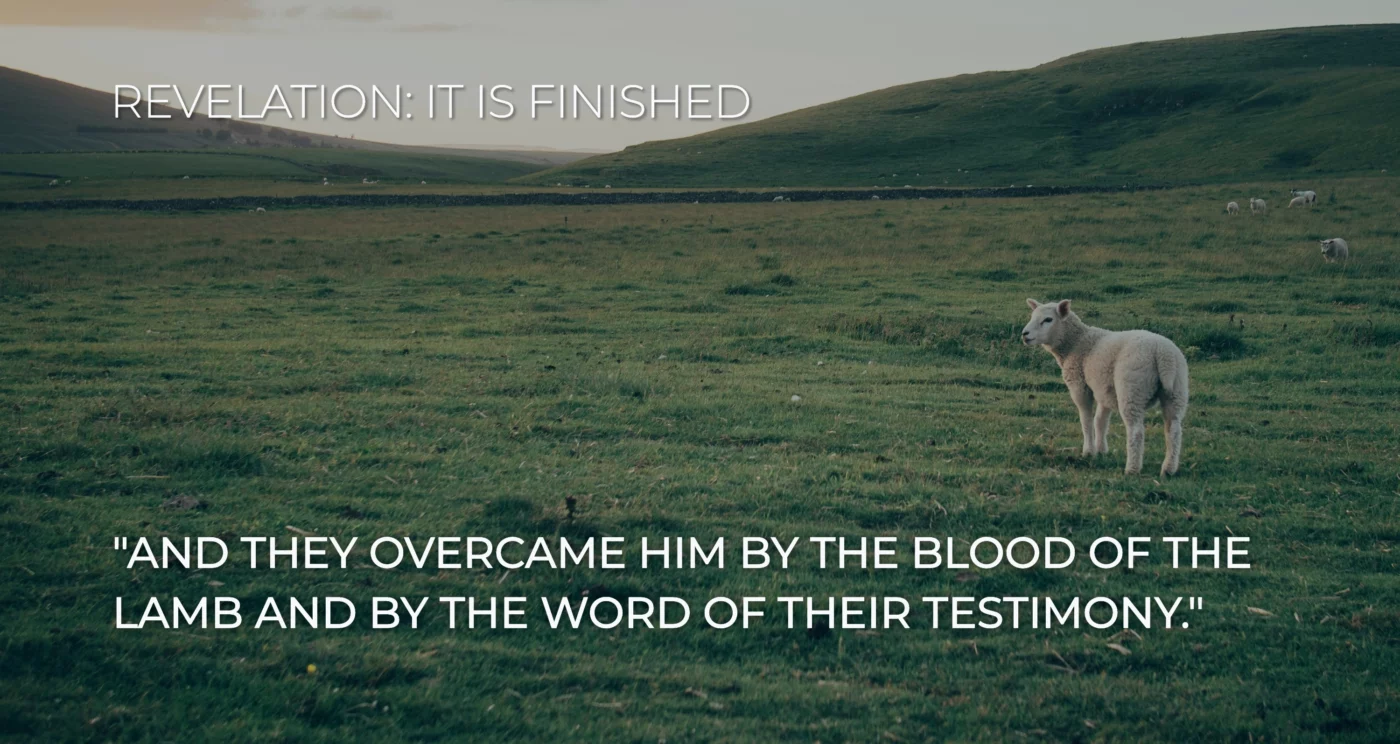
11 And they overcame him by the blood of the Lamb and by the word of their testimony, and they did not love their lives to the death.
12 Therefore rejoice, O heavens, and you who dwell in them! Woe to the inhabitants of the earth and the sea! For the devil has come down to you, having great wrath, because he knows that he has a short time.”
13 Now when the dragon saw that he had been cast to the earth, he persecuted the woman who gave birth to the male Child.
14 But the woman was given two wings of a great eagle, that she might fly into the wilderness to her place, where she is nourished for a time and times and half a time, from the presence of the serpent.
15 So the serpent spewed water out of his mouth like a flood after the woman, that he might cause her to be carried away by the flood.
16 But the earth helped the woman, and the earth opened its mouth and swallowed up the flood which the dragon had spewed out of his mouth.
17 And the dragon was enraged with the woman, and he went to make war with the rest of her offspring, who keep the commandments of God and have the testimony of Jesus Christ.
This text illuminates several graphic SCENES that clearly picture the deliverance granted to the saints and the defeat of Satan.
The First SCENE is,
Satan’s Humiliation
Our text opens with a dramatic statement: “War broke out in heaven…” Is this something new? Hasn’t this been going on since the fall of Satan, as recorded in Isaiah 14 and Ezekiel 28? Satan’s domain is the earth and the air around the earth. That is why the Bible describes him as the “god of this world” (2 Cor. 4:4) and the “prince of the power of the air” (Eph. 2:2). However, at present, he has access to the throne of God. It may be difficult for us to think about Satan having access to heaven, but Job 1:6 and other scriptures clearly support that understanding.
The combatants are spelled out in verse 7. “Michael and his angels fought with the dragon; and the dragon and his angels fought…” I do not believe that the war described in our text is the original rebellion of Satan. Just as Jesus’ first coming aroused demonic opposition, so His return to heaven (v. 5) is pictured as being the occasion of the renewed battle here.
Michael is designated as the archangel in Jude verse 9. According to Daniel 10:13, 21, and 12:1, he is the champion of the Jewish people. Archangel means “chief or highest messenger”—because of his supreme rank over the heavenly hosts and his role as the ultimate defender of God’s people in scripture. His name translates to “Who is like God?” and highlights his status as the champion of divine sovereignty.
This raises another question: what causes this fresh outbreak of war? Daniel 12 helps us, “At that time [the time of the end] Michael shall stand up, the great prince who stands watch over the sons of your people; and there shall be a time of trouble, such as never was since there was a nation, even to that time.”
This action by Michael will result in a great war in heaven, which has been Satan’s domain and where the Lord has met with His redeemed and raptured saints. Satan and his angels will be defeated and cast down to the earth (Rev. 12:9). Who starts this war and how it will be fought have not been revealed to us, but both the faithful and fallen angels possess tremendous energies and powers of which we know little.
Our text continues, “but they (the fallen angels) were not strong enough to prevail, nor was a place found for them in heaven any longer.” This description is similar to the kingdoms of Daniel 2:35, “Then [the image in Nebuchadnezzar’s dream] the iron, the clay, the bronze, the silver, and the gold were crushed together, and became like chaff from the summer threshing floors; the wind carried them away so that no trace of them was found.” Satan’s expulsion from heaven will be final and total.
This decisive battle led to the consequences outlined in verse 9. “So the great dragon was cast out, that serpent of old, called the Devil and Satan, who deceives the whole world; he was cast to the earth, and his angels were cast out with him.” The triple use of the Greek verb, ballo, ensures the completeness of the expulsion. What utter humiliation!
This one, Satan, whose aim was to destroy the whole inhabited world, has now been cast out into the earth with all of his demonic host. He is so artful in the practices of sin that he teaches us to deceive ourselves (1 John 1:8), and can almost lead astray the very elect of God (Matthew 24:24). So, the great dragon, Satan, is cast down once and for all! Jesus said this in John 12:31, “Now is the judgment of this world; now the ruler of this world will be cast out.” And in Luke 10:18, He said, “I saw Satan fall like lightning from heaven.”
This dramatic description of Satan’s humiliation leads us directly to the next scene.
The Next SCENE is,
Heaven’s Jubilation
As a result of this decisive battle, John heard a loud voice in heaven proclaim, “[Just now has fully come] the salvation, and the strength, and the kingdom of our God, and the power [authority] of His Christ, for the accuser of our brethren, who accused them before our God day and night, has been cast down.” The prophecy of 1 Corinthians 15:24-28 is nearly complete!
We’re not told who is speaking; however, it must be someone who can sympathize with human beings. Could it be the faithful martyrs in heaven? That would fit well with Revelation 11:15 and 19:1. Even though John sees this in the prophetic future, the casting down is in the aorist tense. What that means is this – Satan’s defeat is so sure that it is treated as an event that has already taken place in the past. And heaven breaks out in joyous worship and praise.
Here, Satan is named “the accuser of our brethren.” In this context, that refers to the faithful tribulation saints still on earth at this time. However, we know he is the accuser of all believers throughout history; that is his constant occupation. That’s why Peter tells us, “Be sober, be vigilant; because your adversary the devil walks about like a roaring lion, seeking whom he may devour. Resist him, steadfast in the faith, knowing that the same sufferings are experienced by your brotherhood in the world.”
The rejoicing that breaks out in heaven is also a result of the “brethren” of verse 10, overcoming the accuser. Again, a future act is spoken of in the past tense. How did they do it? “Because of the blood of the Lamb and by the word of their testimony, and they did not love their lives to the death.” Let’s unpack this sentence.
The blood of the Lamb is central to the defeat of Satan and to the saints’ ability to overcome. Peter reminds us, “You were not redeemed with perishable things like silver or gold from your futile way of life inherited from your forefathers, but with precious blood, as of a lamb unblemished and spotless, the blood of Christ” (1 Peter 1:18–19). These suffering believers knew the forgiveness that Paul wrote about in Romans 4:7–8: “Blessed are those whose lawless deeds have been forgiven, and whose sins have been covered. Blessed is the man whose sin the Lord will not take into account.” The accusations of Satan are nullified by the blood of the Lamb, which renders the believer pure and makes possible his spiritual victory.
The word of the saints’ testimony opposes the deceiving work of Satan, for the preaching of the gospel is the power of God unto salvation (Romans 1:16). Despite all the persecution (and even martyrdom) they suffered, they will remain faithful witnesses to Jesus Christ; their testimony will never waver.
The suffering Tribulation saints also were able to fend off Satan’s onslaught because they did not love their lives even when faced with death. Their faithfulness extended even to death; they willingly paid the ultimate price for their loyalty to Christ. They knew that all martyrdom could do for them was usher them into the eternal bliss of Christ’s presence. Because their faith was genuine, it not only justified and sanctified them but also enabled them to persevere all the way to glorification. A sure mark of true believers is that they continue in the faith even to death. In the words of Jesus, “The one who endures to the end, he will be saved.”[1]
This section of our text concludes with a final note of praise and a sobering warning. “Therefore rejoice, O heavens, and you who dwell in them! Woe to the inhabitants of the earth and the sea! For the devil has come down to you, having great wrath [in a fit of rage], because he knows that he has a short time.” The devil’s departure from his warfare in the heavens informs him that his time for harming men is limited, and hence his great wrath (thumon, boiling rage).
Satan’s humiliation and heaven’s jubilation point us to the final scene of deliverance.
The Final SCENE is,
The Woman’s Preservation
This final section of verses returns to the narrative of the chapter’s first part. “Now, when the dragon saw that he had been cast to the earth, he persecuted the woman who gave birth to the male Child.” In his rage at being kicked out of heaven, the dragon immediately goes off in hostile pursuit of the Jewish people, and perhaps Jewish believers in the Messiah in particular. The precise meaning of the details is not clear; the general sense is that God foils Satan’s most demonic attempts to destroy Israel. This verse corresponds with Matthew 24:15 and following.
As a means of deliverance, the woman is given 2 wings of a great eagle, enabling her to “fly” into the wilderness to a place prepared for her succor. This metaphor of deliverance is common throughout the Scriptures. In Exodus 19:3-4, we read, “And Moses went up to God, and the Lord called to him from the mountain, saying, ‘Thus you shall say to the house of Jacob, and tell the children of Israel: ‘You have seen what I did to the Egyptians, and how I bore you on eagles’ wings and brought you to Myself.” Deuteronomy 32:11-12 and Isaiah 40:31 are well-known companion passages.
When the woman reaches the prepared place, God will care for her for 3.5 years, protecting her from the rule of the serpent and his accomplices during this last part of the Tribulation. This time corresponds with the 1,260 days of verse six and “the times, time, and half a time” of Daniel 7:25. Whether natural or supernatural means are used, it is clear that God does preserve a godly remnant, though according to Zechariah 13:8, two-thirds of Israel in the land will perish during this time.
In his impotent rage, Satan casts out of his mouth water as a river to carry the woman (Israel) away and destroy her. But the earth helped the woman by splitting open and “drinking down” the water which the dragon cast out of his mouth. Since Satan is a spirit being, this flood is most likely symbolic. This imagery derives from the Old Testament, where floods symbolize trouble in general and an invading, destroying army (Isaiah 59:19).
The flood cast after Israel is the total effort of Satan to exterminate the nation, and the resistance of the earth is the natural difficulty in executing such a massive program. The nature of the terrain in the Middle East provides countless places of refuge for people fleeing. Whether the exact meaning of these two verses can be determined with certainty, the implication is that Satan strives with all his power to persecute and exterminate the people of Israel. By divine intervention, both natural and supernatural means are used to evade his program and to carry a remnant of Israel safely through their time of great tribulation.[2]
Frustrated yet again, Satan goes off in a great rage to make war with the scattered followers of the Lamb who were not being nourished in the wilderness. The devil carries on relentless war with all those “which keep the commandments of God and hold the testimony of Jesus.” These two qualities provoke the wrath of Satan, as they always have (Rev. 1:9; 6:9).
Taken as a whole, chapter 12 is a fitting introduction to the important revelations given in chapter 13. Here are the principal actors of the great tribulation, along with the historical background, which provides so much additional information. Israel, Satan, Christ, the archangel, and the godly remnant figure largely in the closing scenes of the age. Next, the two principal human actors are introduced: the beast out of the sea and the beast out of the earth, the human instruments Satan uses to carry out his program during the great tribulation.
Yes, deliverance has come. While the time and events described in our text lie yet in the future, their fulfillment is so sure that we can pronounce them “done.” Satan’s humiliation, heaven’s jubilation, and the woman’s preservation are, as we say, “a done deal.”
I base that confidence, at least in part, on 2 Corinthians 1:19-20, “For the Son of God, Jesus Christ, who was preached among you by us—by me, Silas, and Timothy—was not Yes and No, but in Him was Yes. For all the promises of God in Him are Yes, and in Him Amen, to the glory of God through us.” Further, Jesus Himself, in the context of Matthew 24 and the end of time, said, “Heaven and earth shall pass away, but my words shall not pass away” Matthew 24:35.
And so, we are left with a binary choice. We either accept by faith what the Scriptures tell us and act upon that belief, or we reject God’s Word and expose ourselves to His wrath and judgment. What is your choice?
[1] MacArthur, New Testament Commentary on Revelation, p. 668
[2] Walvoord, The Revelation of Jesus Christ, p. 201